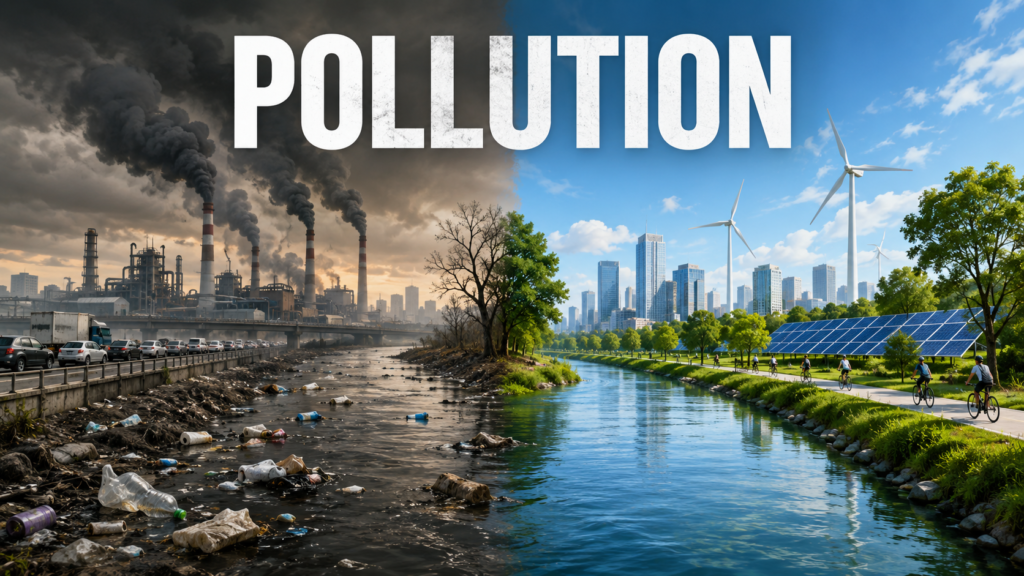

Pollution is among the most serious problems of the modern world. It affects the air we breathe, the water we drink, the food we eat and the natural environment which supports life. Industrial growth and technological development have improved the living standards but also resulted in increased waste, pollution and overuse of natural resources.
There’s more to pollution than dirty streets or smoke pouring out of factories. For example, it can be seen as plastic floating in a river, or unseen as harmful gasses in the atmosphere. It can take time to develop, but its effects can last for decades, and reach far beyond the place where it started.
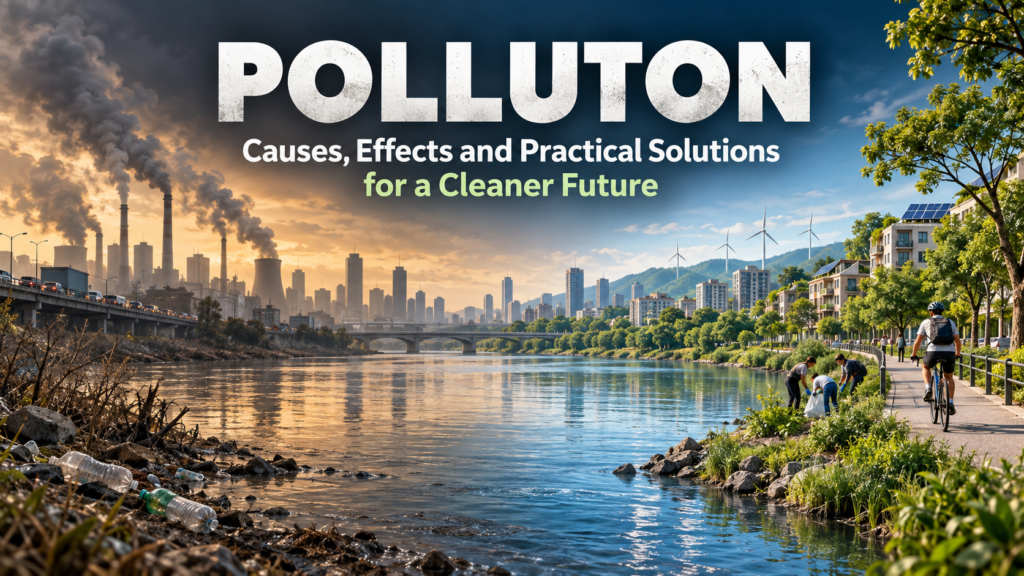
The first step in controlling pollution is to know the causes and effects of pollution. ‘Governments and industries have huge responsibilities, but individuals can also make a difference by practical choices in everyday life.
What is Pollution?
Pollution is the introduction into the environment of harmful substances or forms of energy that result in damage. Pollutants can be chemical, gaseous, plastic, sewage, noise, heat, radiation or biological waste.
Natural phenomena such as volcanic eruptions, wildfires and dust storms also cause pollution. But more worrying is pollution caused or aggravated by human activities. Main sources are transport, industrial production, mining, construction, agriculture and improper disposal of waste.
Pollution can affect a small neighborhood, an entire country, or even the world’s environment. Air pollution released in one country can cross borders, plastic waste thrown in rivers can travel far away to the oceans.
Types of Pollution
There are many types of pollution and each type impacts the environment differently.
1. Air Pollution
Air pollution is the presence of harmful gasses, smoke and tiny particles in the air. It’s common especially in industrial areas and in crowded cities.
Major sources of air pollution are:
* Emissions from cars, busses, and trucks
* Smoke from factories and power stations
* Burning petrol, diesel, coal and other fossil fuels
* Dust from construction
* Burning of agricultural residues and domestic refuse
* Forest-fires
* Indoor smoke from traditional cooking fuels
* Toxic chemical fumes
Examples of air pollutants are carbon monoxide, nitrogen oxides, sulfur dioxide, ground level ozone and particulate matter. Fine particles are particularly harmful, because they can go deep into the lungs, and even enter the bloodstream.
Breathing difficulties, asthma, allergies, lung diseases, heart-related problems and irritation of the eyes and throat can be caused by air pollution. Children and older adults and people with existing medical conditions are often more vulnerable.
It also damages plants, cuts visibility and leads to environmental issues like acid rain and climate change.
2. Water Pollution
Water pollution occurs when harmful substances get into rivers, lakes, oceans, groundwater, and other water sources. Clean water is vital for drinking, farming, sanitation, wildlife and industry. Water pollution therefore directly threatens people and nature.
The usual causes are:
* Untreated sewage
* Industrial chemical.
* Oil spills
* Agricultural fertilizers and agricultural pesticide
* Plastic garbage
* Hospital and household waste
* Mining operations
* Detergents and cleaning agents
When sewage or chemicals get into a water supply, the water may no longer be safe to drink, bathe in or irrigate with. Polluted water can transmit diseases and expose communities to toxic substances.
Agricultural fertilizers can also cause lakes and rivers to grow too much algae. As these algae die and decompose they use up the oxygen in the water. That makes it hard for fish and other aquatic life to survive. Water pollution is particularly dangerous because it can be transmitted through the food chain. Toxic substances are eaten by small water animals, which may then be eaten by fish, animals and humans.
3. Soil and land contamination
Land pollution is the buildup of waste and toxic substances on or under the ground. It is mainly due to improper disposal of waste, over use of chemicals and industrial activities.
Land pollution sources include:
* Plastic bags, bottles, packaging
* E-waste
* chemical of industrial use
* Building debris
* Medical wastes and batteries
* Excessive use of fertilizers and pesticides
* Mine wastes
* Inadequately managed landfills
Soil pollution decreases land productivity and can influence the quality of the crops. Toxic chemicals can stay in the soil for years and can leach into groundwater or the food chain.
Plastics are a significant land pollutant since most of the plastic products do not decompose naturally within a short time. Instead they slowly break down into tiny pieces called microplastics. Such particles can be transported by soil, water and biota.
4. Noise Pollution Noise
Noise pollution is unwanted or excessive sound that may be harmful to human or animal life or the environment.
Sources include common:
* Traffic on roads
* Trains and planes
*Construction
* Machinery for factories
* Amplifiers
* Generator
* Bustling shopping areas
Prolonged exposure to loud noise levels can cause stress, headaches, sleep disorders, difficulty concentrating and hearing loss. It may also cause anxiety and decrease quality of life.
Wildlife is also affected. Many animals communicate by sound, find mates, sense danger and locate food. It’s a natural behavior that can be thrown off by too much human noise.
5. Light Pollution
Light pollution happens when artificial light is too much, misdirected or unnecessary. Bright advertising boards, streetlights, buildings and outdoor lighting can cause the night sky to be unusually bright.
At night, too much light interferes with human sleep patterns and confuses animals that need natural darkness. Artificial light can affect creatures like migratory birds, insects and sea turtles.
Light pollution is also an energy waste. Proper orientation and efficient lighting can lower consumption of energy and the environment.
6. Plastic Pollution
Due to the extensive use of disposable plastic products, the problem of plastic pollution has become universal. Bags, bottles, wrappers, straws and food containers are often thrown away after just a few minutes of use.
Poorly managed plastic waste can clog drainage systems, pollute rivers, damage soil and get into the oceans. Marine animals can eat plastic and also get caught in discarded fishing gear and packaging.
When plastic turns into tiny pieces it doesn’t actually go away. Microplastics may remain in the environment and contaminate water, food and living organisms.
So it is better to cut down on unnecessary use of plastic than just recycling.
7. Nuclear and Thermal Pollution
The cause of thermal pollution is factories or power plants dumping hot water into rivers, lakes or seas. Water temperatures can increase rapidly, reducing oxygen and disrupting aquatic ecosystems. Radioactive pollution is caused by mismanagement, improper storage or disposal of radioactive materials.
Less common than some other forms of pollution, but it can have serious and long-lasting effects. “Radioactive substances and their exposure pose risks to human health, wildlife and future generations and must be closely watched.
Major Sources of Pollution
A number of associated activities explain the rise in pollution.
1. Economic growth
Every day we use products made in factories, but industrial processes also give off smoke, chemicals and waste. Without the right filters, treatment facilities, and environmental safeguards in place, industries can pollute the air, water and land all at once.
Cleaner ways of producing goods and getting rid of waste can cut pollution from industry without giving up economic development.
2. Transport
Petrol and diesel vehicles release gasses and fine particles into the air. The problem is made worse by traffic congestion in which slow moving or stationary vehicles continue to burn fuel.
You can reduce emissions by driving a cleaner car, carpooling, walking, biking or taking public transportation.
3. Oil and Gas
Coal, oil and natural gas are commonly used to produce electricity, fuel vehicles and operate industries. The burning of these fuels releases greenhouse gasses and air pollutants .
A move toward renewable energy sources such as solar, wind and hydropower can be made gradually to reduce dependence on fossil fuels.
4. Incorrect Waste Disposal
Indiscriminate dumping of waste on streets, open spaces and water bodies causes serious environmental and health problems. Open burning of waste produces toxic smoke. Poorly managed landfills can contaminate soil and groundwater.
Waste should be segregated, collected and treated according to its type. Organic waste can be composted, recyclable material can be salvaged and hazardous waste needs special handling.
5. Farming
Today’s agriculture uses fertilizers, pesticides and machinery. Too many chemicals running off can damage soil and contaminate nearby water sources. Livestock farming also generates a lot of waste and greenhouse gasses.
You can lessen these impacts through the use of sustainable farming methods such as precision chemical application, crop rotation, and organic practices. Loss of the Forest Trees absorb carbon dioxide and release oxygen and help filter some air pollutants.
They also protect the soil and help to maintain natural water cycles. Deforestation for construction, farming or mining gets rid of the natural protection of ecosystems. Erosion of soil and loss of biodiversity may happen. Environmental conditions are harder to manage.
6. City Growth and Population
Increase Populations expand and require greater housing, transportation, energy, food and consumer products. Cities without planning will create more waste and pollution. Efficient public transport, green space, waste treatment systems, clean energy and reliable sewage infrastructure are needed for urban development.
Pollution and impact on human health Pollution can affect almost every part of the human body. The seriousness of the effect depends on the pollutant, the length of time a person is exposed and the health of the individual. Potential health effects include:
* Asthma and respiratory problems
* Diseases of the lung and heart
* Eyes, nose and throat irritation
* Problems with Skin
* Headaches and tiredness
* Loss of hearing
* Problems sleeping
* Diseases carried by water
* Development and reproduction problems
* Higher stress and anxiety
Pollution also carries indirect health risks. For instance, polluted soil can cause food to be unsafe and polluted water can transmit diseases in entire communities. Low-income communities are often disproportionately affected, as they may be located near industrial zones, high-traffic roads, landfills or contaminated water sources .
They may also have less access to clean infrastructure and medical care. Pollution is thus not only an environmental problem but also a social and public health problem.
Effects on Animals & Ecosystems
Each species requires a balanced habitat. Pollution upsets that balance by creating dirty food, water and shelter.
Animals may ingest plastic, polluted water or harmful chemicals. Pesticides are poisonous to the insects that pollinate plants, and oil spills can destroy birds’ feathers and the bodies of sea animals.
The loss of one species can also make other parts of the ecosystem suffer. For example pollinating insects. Loss of them effects food production and plant reproduction. The reduction of fish stocks can negatively affect marine environments and communities that depend on fishing.
Pollution can also destroy habitats and reduce the variety of life. Once a species is extinct, it can’t be brought back.
Pollution & Climate Change
Pollution and climate change are very much related problems but not quite the same. Pollution means harmful substances are present in air, water and soil. Climate change is about the long term changes in the weather and temperatures. Both of these problems result from burning fossil fuels. It releases pollutants harmful to air quality and greenhouse gasses which trap heat in the atmosphere.
Then climate change can make some types of pollution worse. Higher temperatures can produce more ground level ozone. Heavy rainfall can carry sewage and waste into water sources. Wildfires also create huge amounts of smoke and toxic particles. So reducing fossil fuel use can clean the air and increase climate action.” Economic and Social Impact And pollution has huge economic costs. Governments and families could end up paying more for health care, water treatment, waste disposal and environmental clean-up.
Pollution of soil or water can result in loss of income for farmers if it reduces the quality of their crops. Water pollution harms fish populations and, therefore, harms fishing communities. Tourism could be damaged when beaches, rivers, forests or cities become dirty and unhealthy.
Pollution may also pollute the workers and make them less productive. Children who are frequently ill or absent from school may experience long term educational disadvantages. It’s usually cheaper to stop pollution than to clean up after it.
How Governments can cut Pollution
Pollution cannot be solved by individual attempts and we need effective public policies. Governments can:
* Establish and enforce emission standards
* Pollution control in industry
* Better transportability (public)
* Expand wastewater and sewage treatment facilities
* Preserve rivers, forests and wetlands
* Promotion of renewable energy
* Cut down on toxic single-use plastics
* Promote sustainable agriculture
* Create more green zones in cities
* Take action against illegal dumping
* Provide accurate information on pollution Invest in education on the environment
Environmental laws require regular review and equitable implementation to win backing. Rules are of little use if violations are not taken seriously. Governments also have to work across regional and national borders because air, water and ocean pollution do not respect political boundaries.
The Impact of Industries & Businesses
Businesses are important actors in pollution prevention because of the use of energy, raw materials, packaging and transportation. Companies can reduce their impact on the environment by:
* Installing suitable pollution-control equipment
* Pre-disposal wastewater treatment
* Using cleaner energy sources
* Reducing excessive packaging
* Designing for repairability and durability
* Using materials again in production
* Developing safe systems for dangerous waste
* Monitoring emissions in the supply chain
* Issuing transparent environmental reports.
Companies should be held accountable for the entire life cycle of their products, from the extraction of raw materials to the manufacturing, transportation, use and final disposal. Sustainability should not be a marketing gimmick. It must be proved by concrete actions. What can people do No one person can solve the pollution crisis, but the choices of one person can be powerful when multiplied by millions of people. Some practical steps would be:
1. Waste minimization
Avoid unnecessary purchases and purchase items that can be repaired or reused. Bring a reusable water bottle, shopping bag, and food container when possible.
2. Waste Separation
Separate recyclables, organic waste and toxic waste. Batteries, electrical equipment, medicines and chemicals are not to go in the rubbish. Please do not drop litter Even if there is no dustbin nearby, dispose of your trash responsibly. Litter on our roads can end up in our drains, rivers and oceans.
3. Conserve Power
Switch off lights and appliances when not in use. Choose energy efficient products and use natural lighting whenever possible. Burn less fuel for electricity. That means using less energy .
4. Use Better Transportation
Walk or cycle for short trips where it is safe. Public transit and car sharing can cut the number of cars on the road.
5. Save Water!
Fix dripping taps, stop wasting water and keep oils, medicines and chemicals out of drains
6. Trees for Growth and Security
Trees purify the local air, offer shade, cut erosion and support wildlife. Existing trees should not be replaced after removal, but retained and protected.
7. Buy Responsibly
Look for products with little or no packaging and support companies that have proven environmental credentials. Companies’ products’ production and packaging may be influenced by consumers’ tastes.
8. Share with
Love to Talk about pollution with family, friends and local community. Pass on the good stuff, but be sure to check environmental claims before you pass them along.
The Importance of Environmental Pollution
Awareness is key for long term pollution control. Environmental education is for people to learn what they do every day impacts nature and the health of the public. Schools can educate students on how to sort waste, save water, protect biodiversity and consume responsibly.
Communities can organize clean-up drives, recycling campaigns and tree protection programs. Education should not be fear and guilt inducing. It should equip people with knowledge and practical skills to help them make better choices.
Technology & Innovation Technology can assist us in addressing pollution through cleaner energy, improved recycling, electric transportation and more advanced monitoring systems. Realtime air and water quality sensors. Today’s treatment plants can remove dangerous chemicals from wastewater. New materials may offer safer alternatives to some plastics.
But technology alone does not hold the whole answer. A product marketed as “green” may still need energy, raw materials, and transportation. Innovation needs to go hand in hand with responsible consumption, effective policies and proper waste management.
To a Cleaner Future
Pollution has taken many years to develop so it will not disappear overnight. Real progress will take the cooperation of governments, industries, scientists, communities and individuals. The best medicine is prevention. It is usually cheaper and more effective to prevent waste and pollution from reaching the environment than to clean them up afterward.
Society does not need to abandon development for a cleaner future. It has to be built more smartly, more efficiently and more responsibly. Economic progress and environmental protection should be mutually reinforcing because every economy ultimately depends on healthy people and functioning natural systems.
Abstract Pollution is a threat to human life, wildlife and natural resources and economic stability. Air pollution harms the lungs, polluted water spreads disease, plastic harms ecosystems and excessive noise impacts mental and physical health.
The problem may seem insurmountably difficult, but solutions are already at hand. Pollution can be reduced a long way through the use of clean energy, having good public transport, responsible production, strict environmental laws and proper waste management.
Individuals can contribute by being conscious consumers, reducing waste, conserving resources and demanding accountability. It’s not only about saving beautiful places, either. It is about protecting the basic systems that life depends on.
Clean air, safe water and healthy soil should not be regarded as a luxury. These are the prerequisites for a secure and dignified future. Every responsible decision counts. But with strong policies and real industrial commitment, personal action can lead to real environmental improvement.
FAQ:-
Q1. What is Pollution?
Ans: Pollution is adding things or energy to the environment. Doing damage. It contaminates air, water or land and harms people, animals, plants and ecosystems.
Q2. How many types of pollutants are there?
Ans: Basically there are 7 types of Pollution. Namely air pollution, water pollution, soil pollution, noise pollution, plastic pollution, light pollution and thermal pollution.
Q3. What is the chief source of pollution?
Ans: The primary sources are emissions from vehicles and industrial operations. burning of fossil fuels, raw sewage, agricultural chemicals, plastic waste, construction dust, deforestation and bad waste disposal.
Q4. What are the effects of air pollution to our health?
Ans: Air pollution leads to coughing, difficulty in breathing, allergies, asthma and irritation of eyes and throat. It can cause serious lung and heart disease with long term exposure.
Q5. Who is badly affected by air pollution?
Ans: Children, the elderly, pregnant women and those with asthma, heart disease or other pre-existing health conditions are typically more susceptible. That could also be more exposed for those who work outdoors.
Q6. What should people do when outdoor air is polluted?
Ans: People are advised to check official air-quality information and to cut down on unnecessary outdoor exercise and keep doors and windows closed when advised. Those at risk should follow local health guidance and seek medical advice if they have symptoms they are concerned about.
Q7. How to cut down air pollution in daily life?
Ans: Use public transport, walk or cycle where possible, share vehicle journeys and service vehicles properly. You can cut your emissions and energy use by using energy efficient appliances and burning your waste in a controlled way.
Q8. How does pollution of water happens?
Ans: Water pollution happens when waste products like sewage, chemicals, pesticides, fertilizers, oil, plastic or other waste are dumped into rivers, lakes, oceans or ground water. Pollution of water is caused by: Contaminated water with chemicals is a threat to safety of drinking water, crops and aquatic life.
Q9. Can the well boiled water kill germs & harmful bacteria?
Ans: Boiling kills many germs that cause illness but it may not remove chemicals, heavy metals or microplastics. If you think your water may be contaminated with chemicals, have it tested and treated by a professional.
Q10. What can families do to help prevent water pollution?
Ans: Never pour cooking oil, paint, medicines, pesticides or other harsh chemicals down your drains or sinks. Use water wisely. Fix leaks. Use fewer chemical cleaners. Take hazardous waste to a designated facility.”
Q11. How to properly separate household waste?
Ans: Separate bins for wet or bio-degradable waste, dry waste for recycling and hazardous waste. Batteries, medicines, bulbs, sanitary waste, electronic items should not be disposed of with normal household waste.
Q12. Why is burning your rubbish at home bad?
Ans: Burning rubber, plastic and mixed waste produces toxic smoke and fine particles. Such pollutants are harmful to the local population, reduce air quality and leave toxic residues in the soil.
Q13. Can Recycling Solve the Plastic Pollution Problem?
Ans: Not really. Recycling is good, not all plastic products are very good recyclable. The best way forward is to avoid unnecessary plastic and to cut consumption and re-use long life products before recycling.
14. What are Microplastics?
Ans: Microplastics are tiny pieces of plastic, typically smaller than five millimeters. They can arise from the breakdown of larger plastic products, or from synthetic clothing, tyres and industrial materials. They can be dispersed through water, soil and food chains.
Q15. How is electronic waste properly disposed of?
Ans: Authorized e-waste collection & recycling centers should be used to dispose of old phones, batteries, chargers, computers and other electronic products; They should not be burned, or thrown away, or put in the ordinary dustbin.
Q16. What is Noise Pollution? How can it be controlled?
Ans: Noise pollution is the presence of harmful levels of noise from traffic, construction, machinery, loudspeakers and other sources. The noise can be reduced by using volume control, not using unnecessary horns, maintaining equipment and by adhering to the permitted noise limits and times.
Q17. How to cut indoor air pollution?
Ans: Good ventilation of rooms when weather permits and no smoking inside houses. Fix damp spots, control dust, safe use of cooking fuels. The cooking smoke is taken care of by exhaust fans and well-maintained chimneys.
Q18. Can trees reduce pollution?
Ans: Yeah. Trees take in carbon dioxide, give out oxygen, reduce heat, protect soil, and absorb some air-borne particles. But tree plantation must be accompanied by emission control and proper waste management.
Q19. How can Students’ contribution to pollution prevention?
Ans: Students can help prevent littering, use reusable bottles, conserve water and electricity, sort trash and take part in clean-up activities or tree planting. They can also encourage their families and classmates to adopt responsible habits.
Q20. Who is responsible for pollution prevention?
Ans: Pollution control is a shared responsibility. Governments must make and enforce laws; industries must cut emissions and manage waste responsibly; and citizens must make informed choices and report serious pollution to the appropriate local authority.